Choosing a smoothie vending machine manufacturer is not just a price comparison. You are choosing the company that will support the machine design, payment setup, ingredient workflow, shipping, and after-sales service.
For B2B buyers, the safest choice is a supplier that can explain the full project clearly. The manufacturer should understand your location, payment method, cup size, branding needs, and daily operation plan.
This guide explains what to check before you buy. It is written for distributors, vending operators, chain businesses, and project buyers who need a reliable commercial machine.
If you are comparing machine configurations, you can also review YumBoxs’ main smoothie vending machine for sale page.
What Should Buyers Look for in a Smoothie Vending Machine Manufacturer?
A good manufacturer should help you answer practical buying questions.
- Has the supplier built this type of machine before?
- Can they show real machine photos and videos?
- Can the machine support your ingredients, cup size, payment method, and language?
- How is the machine inspected before shipment?
- Can the supplier support export, packing, installation guidance, and after-sales service?
These details matter because smoothie vending machines are more complex than standard snack or drink machines. They may include frozen fruit storage, liquid tanks, powder bins, cup dispensing, blending, automatic rinsing, remote management, and payment hardware.
A supplier that cannot explain these systems clearly may not be ready to support your project after delivery.
1. Check Relevant Product Experience
Start with direct experience. The supplier should have real experience with smoothie vending machines, not only general vending machines.
A smoothie vending machine needs more than a cabinet and payment system. It must manage ingredients, cups, blending, cleaning, and software in one workflow.
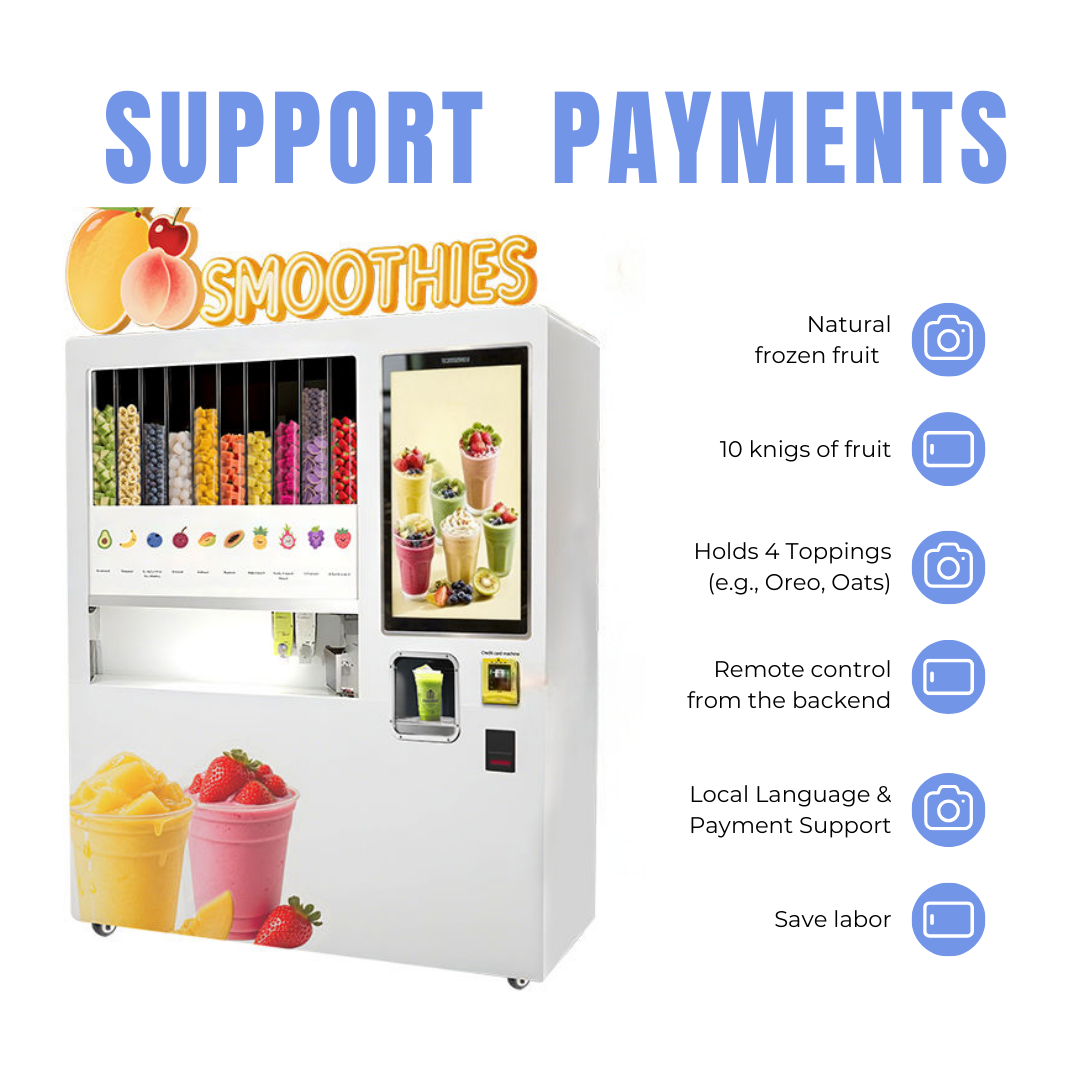
For example, the current YumBoxs smoothie vending machine configuration includes:
- A 21.5-inch touchscreen
- Eight fruit bins
- Four liquid tanks
- Four powder bins
- Automatic cup dispensing
- Automatic rinsing after each cup
- Remote backend management
- Wi-Fi, Ethernet, or 4G connection
These features affect daily operation. They influence menu setup, ingredient preparation, cleaning, maintenance, and customer experience.
Ask the manufacturer to explain the full workflow. A reliable supplier should be able to describe how ingredients are stored, how cups are dispensed, how blending works, and how the machine rinses after an order.
2. Ask for Real Machine Photos and Videos
Do not make a decision based only on catalog images. Ask for real photos and videos of the actual machine model.
Useful materials may include:
- Front and side views of the machine
- Touchscreen ordering videos
- Cup dispensing videos
- Fruit bin, liquid tank, and powder bin photos
- Blending process videos
- Automatic rinsing videos
- Backend management screenshots
- Production, inspection, packing, or loading photos
These materials help you confirm that the supplier is showing a real machine. They also help your team understand how the machine will operate in the field.
Be careful with unrelated stock images or photos from other companies. If a supplier shows a machine image, ask what it actually shows and whether it is their own machine.
3. Review Manufacturing and Customization Capability
Many commercial projects need customization. This may include exterior branding, interface language, menu settings, recipe configuration, cup type, or payment hardware.
Customization should be clear and controlled. It should not create problems for maintenance, cleaning, spare parts, or software support.
Before you confirm an order, ask:
- Can the exterior use custom brand stickers?
- Can the logo appear on the interface?
- Which interface languages are available?
- Can the machine support the required payment hardware?
- Can menu and recipe settings be adjusted?
- Can the machine connect by Wi-Fi, Ethernet, or 4G?
- What information is needed before the final quote?
YumBoxs project information currently supports machine branding and interface customization depending on configuration. English, Spanish, Arabic, and Turkish interfaces can also be supported depending on the setup.
Avoid vague promises. Ask the manufacturer to confirm the exact customization scope before production.
4. Confirm Payment System Support
Payment compatibility can decide whether the machine works commercially in your market. A machine may work well mechanically but still fail if the payment system does not match local customer habits.
For YumBoxs smoothie vending machines, Nayax card payment is available. Coin acceptors and bill acceptors are optional depending on the project configuration.
Before production, confirm these points:
- Is card payment required?
- Is NFC or mobile wallet payment needed?
- Is QR-code payment needed in the target country?
- Is cash payment necessary?
- Is the local payment provider compatible?
- Who sets up the payment account?
- Does the buyer need a local merchant account?
Payment systems are often country-dependent. Do not assume one setup will work everywhere. Confirm the target country, currency, provider, network connection, and account process before production.
CTA: Compare Manufacturer Options
5. Understand the Quality Inspection Process
A smoothie vending machine should be inspected before shipment. It includes mechanical, electrical, refrigeration, software, and payment-related systems.
Ask the manufacturer which checks are completed before packing. Important checks may include:
- Touchscreen and interface operation
- Cup dispensing test
- Fruit bin, liquid tank, and powder bin function check
- Blending process check
- Automatic rinsing check
- Frozen storage or cooling performance check
- Network connection test
- Payment hardware test when installed
- Door, lock, lighting, and safety check
- Packing inspection before shipment
The goal is simple: reduce the chance of basic problems after arrival.
For distributors and project buyers, it is reasonable to request inspection photos or videos before balance payment and shipment. If you need third-party inspection, discuss it before the order is confirmed.
6. Check Shipping and Export Experience
International buyers should review the supplier’s export process. A smoothie vending machine is a commercial machine, so shipping details affect the real project cost.
Ask the manufacturer to confirm:
- Machine dimensions and weight
- Packing method
- Export packing photos
- Shipping method
- Incoterms used for the quotation
- Destination port or delivery address requirements
- Required import documents
- Whether unloading equipment may be needed
- Whether installation guidance is available after arrival
Shipping cost depends on destination, postal code, quantity, dimensions, weight, and delivery terms. It should not be treated as a fixed number.
If a supplier gives a shipping quote without asking for destination details, machine configuration, and delivery terms, the quote may not be accurate enough for a real purchasing decision.
7. Confirm Installation and After-Sales Support
After-sales support is important for any buyer planning to operate machines in gyms, malls, schools, hotels, hospitals, offices, or other commercial locations.
Before ordering, ask what support is included after shipment.
- Installation guidance
- Remote technical support
- User manuals or operation videos
- Spare parts support
- Cleaning and maintenance guidance
- Software or backend guidance
- Troubleshooting process
- Warranty scope and exclusions
Current YumBoxs project information states that remote technical support is available. It also states that a one-year warranty applies to qualifying non-consumable parts under the warranty terms.
Buyers should still confirm the exact warranty scope, response process, and spare parts policy before purchase.
Also confirm the installation environment. Indoor or sheltered installation is recommended. Outdoor installation requires a suitable canopy and weather protection.
Questions to Ask Before Choosing a Supplier
Use this checklist when comparing manufacturers.
| Evaluation Area | Questions to Ask |
|---|---|
| Product experience | Have you manufactured this exact type of smoothie vending machine before? |
| Machine evidence | Can you provide real photos and videos of the machine and workflow? |
| Configuration | How many fruit bins, liquid tanks, powder bins, and cups does the machine support? |
| Payment | Which payment systems are available for my target country? |
| Connectivity | Does the machine support Wi-Fi, Ethernet, or 4G? |
| Customization | What branding, language, recipe, and interface options are available? |
| Quality inspection | What tests are completed before shipment? |
| Shipping | What dimensions, weight, packing method, and shipping terms apply? |
| Installation | What site conditions are required? |
| After-sales | What support, warranty terms, and spare parts process are available? |
This checklist helps you compare suppliers in a practical way. It also helps you avoid choosing only by the lowest initial price.
Final Recommendation
The best smoothie vending machine manufacturer is the one that can support the full buying process. That includes machine configuration, payment compatibility, ingredient workflow, customization, inspection, export, installation, and after-sales support.
Price still matters. But it should be compared after the configuration is clear. A low quote may not include the payment system, branding, shipping, import costs, or support that your project needs.
Before requesting a quote, prepare your target country, location type, payment method, branding needs, and machine quantity. This helps the manufacturer give a more accurate recommendation.
CTA: Compare Manufacturer Options: https://yumboxs.com/smoothie-vending-machine-for-sale/