Vending machine payment systems are a key part of any self-service vending project. A machine can have a strong product concept, but it will not convert well if customers cannot pay in the way they expect.
For B2B buyers, payment should be confirmed before production. The right setup depends on the target country, customer habits, machine type, local payment providers, network connection, and merchant account requirements.
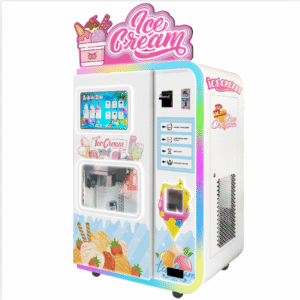
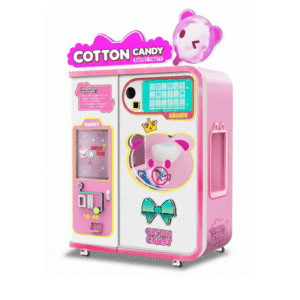
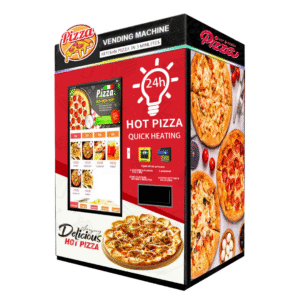
This guide explains the main payment options used in modern vending machines. It applies to many vending categories, including drink machines, snack machines, frozen food machines, coffee machines, fresh food machines, ice cream machines, cotton candy machines, pizza vending machines, and smoothie vending machines.
As an example, a commercial smoothie vending machine may need card payment, NFC payment, cash payment, or local QR-code payment depending on the country and location.
Why Vending Machine Payment Systems Matter
A vending machine is a self-service sales point. Customers decide quickly. If payment feels slow, unfamiliar, or unreliable, they may leave without buying.
Payment also affects the operator’s daily work. It influences reporting, cash handling, refunds, account setup, settlement, and remote management.
Payment systems can affect:
- Customer conversion at the machine
- Average transaction speed
- Cash collection workload
- Sales reporting and reconciliation
- Refund or failed payment handling
- Network and SIM card requirements
- Merchant account setup
- Production configuration before shipment
This is why payment should not be treated as an accessory. It should be part of the early machine configuration discussion.
1. Bank Card Payment
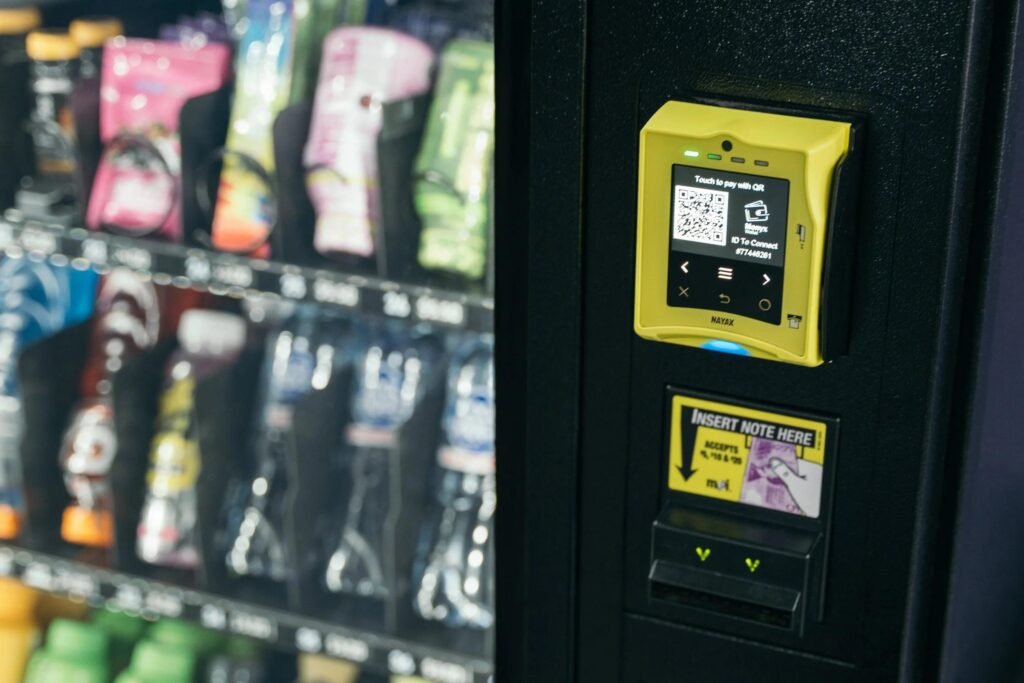
Bank card payment is one of the most common options for commercial vending machines. It is especially useful in gyms, shopping malls, hotels, offices, airports, hospitals, universities, and transport hubs.
Card payment can reduce the need for cash collection. It can also make the buying process faster for customers who no longer carry coins or bills.
Before choosing card payment, confirm:
- Which payment terminal is available?
- Does it support the target country?
- Which currency will be used?
- Who applies for the merchant account?
- What business documents are needed?
- Does the machine need Wi-Fi, Ethernet, or 4G?
- How are failed transactions handled?
For example, current YumBoxs smoothie vending machine information states that Nayax card payment is available. Buyers should still confirm country compatibility, account setup, currency, and network requirements before production.
Do not assume one card terminal works everywhere. Card payment is often country-dependent and provider-dependent.
2. NFC and Contactless Payment
NFC payment allows customers to tap a card, phone, or compatible device on the payment terminal. This can make checkout faster and easier in high-traffic locations.
Contactless payment is useful when customers want a quick transaction. It can be a good fit for vending machines placed in gyms, schools, malls, offices, and busy public areas.
Buyers should ask:
- Does the selected payment terminal support NFC?
- Which contactless methods are supported?
- Is NFC available in the target country?
- Does the provider require a local merchant account?
- Are there setup steps after the machine arrives?
NFC is usually part of a broader card payment setup. Still, it should be confirmed clearly before production.
3. Mobile Wallet Payment
Mobile wallet payment can be important in markets where customers often pay by phone. This may include app-based payment, wallet-based payment, or other digital payment methods used locally.
The key issue is compatibility. The machine hardware, payment provider, merchant account, and local network environment must all work together.
Before requesting mobile wallet payment, confirm:
- Which mobile wallet methods are required?
- Are those methods supported by the payment provider?
- Does the buyer need a local business account?
- Can the payment terminal process these wallet payments?
- Is the feature available in the target country?
For example, a smoothie vending machine in a gym may need card and mobile wallet payment because customers often pay quickly after workouts. A machine in another market may need QR-code payment instead.
4. QR-Code Payment
QR-code payment can be important in countries where customers commonly scan codes for daily purchases. It may be useful for unattended retail, food vending, campus locations, or public-area vending machines.
However, QR-code payment is not one universal system. It depends on the country, payment provider, account setup, and software integration.
Before choosing QR-code payment, prepare these details:
- Target country or region
- Required QR payment provider
- Currency
- Merchant account ownership
- Settlement method
- Network connection plan
- Whether receipts or order records are required
A supplier should not simply promise QR-code payment without confirming the exact provider and country. Ask for written confirmation before production.
5. Cash Payment Options
Some vending locations still need cash payment. This may apply to schools, public areas, older retail environments, or markets where cash remains common.
Cash payment may include a coin acceptor, bill acceptor, or both. For YumBoxs smoothie vending machines, current project information states that a coin acceptor is optional and a bill acceptor is optional.
Cash can help reach more customers, but it also adds operating work. Operators may need to collect cash, manage change, check the cash unit, and handle jams or maintenance.
Before selecting cash payment, confirm:
- Is cash important in the target location?
- Which coins or bills must be accepted?
- Does the cash unit support the local currency?
- How often will cash be collected?
- Who maintains the coin or bill acceptor?
- Is card or mobile payment enough for the location?
Cash should be chosen for a clear operational reason, not only because it is available.
6. Local Payment Providers
Local payment providers are often the hardest part of a vending machine payment setup. Even if the machine supports a payment terminal, the buyer still needs to confirm that the provider can support the business in the target country.
The buyer may need to provide:
- Business registration details
- Merchant account information
- Bank account details for settlement
- Local tax or compliance information
- Store or location information
- Payment provider approval documents
Requirements vary by provider and country. A machine manufacturer should not guess these details. If information is missing, the buyer should confirm it with the payment provider or local payment service partner.
This is especially important for international buyers. Payment setup may take time, and some providers require local business documents before activation.
7. Country-Dependent Compatibility
Vending machine payment systems are not the same in every country. A setup that works in the United States may not work in Mexico, Saudi Arabia, the UAE, Turkey, Brazil, Canada, or another market without checking provider support.
Important country-dependent factors include:
- Accepted payment methods
- Currency
- Payment provider availability
- Merchant account requirements
- Network coverage
- Tax or receipt requirements
- Customer payment habits
For example, a smoothie vending machine in a fitness club may only need card and NFC payment in one country. In another country, the same type of machine may need local QR-code payment or cash options.
The machine type matters, but the market matters more. Always confirm the country and location before finalizing the payment system.
8. Network and Backend Requirements
Most modern payment systems need a stable network connection. The vending machine may use Wi-Fi, Ethernet, or 4G depending on the configuration and location.
Current YumBoxs smoothie vending machine information supports Wi-Fi, Ethernet, or 4G connection depending on configuration. Buyers should confirm which option is best for the real installation site.
Ask these questions before production:
- Will the machine use Wi-Fi, Ethernet, or 4G?
- Who provides the SIM card if 4G is used?
- Is the network stable at the installation location?
- Can the payment terminal work if the connection is weak?
- What backend data can the operator view?
- Who handles payment troubleshooting?
Payment and backend management should be planned together. The operator needs both customer payment and reliable machine monitoring.
9. Questions to Confirm Before Production
Use this checklist before confirming your vending machine order.
| Payment Item | What to Confirm |
|---|---|
| Target country | Where will the machine operate? |
| Machine type | Is it a drink, snack, food, ice cream, pizza, cotton candy, or smoothie vending machine? |
| Currency | Which currency will customers use? |
| Card payment | Which terminal or provider is required? |
| NFC | Does the selected payment system support contactless payment? |
| Mobile wallet | Which wallet methods are needed in the market? |
| QR-code payment | Which local QR payment provider must be supported? |
| Cash | Are coin or bill acceptors required? |
| Network | Will the machine use Wi-Fi, Ethernet, or 4G? |
| Merchant account | Who applies for and manages the account? |
| Settlement | Where will payment funds be settled? |
| Support | Who handles setup and troubleshooting? |
This checklist helps prevent a common problem: ordering a vending machine before the payment environment is fully understood.
For a machine-specific example, you can also read how a smoothie vending machine works.
CTA: Confirm Payment Options
Final Recommendation
The best vending machine payment system depends on the country, location, machine type, customer habits, and merchant account setup. There is no single payment configuration that fits every project.
Before production, confirm whether you need card payment, NFC, mobile wallet payment, QR-code payment, cash payment, or a mix of several options. Also confirm the network method and account process.
If you are planning a vending machine project, prepare your target country, machine category, installation location, preferred payment methods, and business account details before requesting a final configuration.
For smoothie vending machine buyers, this preparation helps the manufacturer confirm the right payment setup before shipment and reduces the risk of delays after arrival.
CTA: Confirm Payment Options