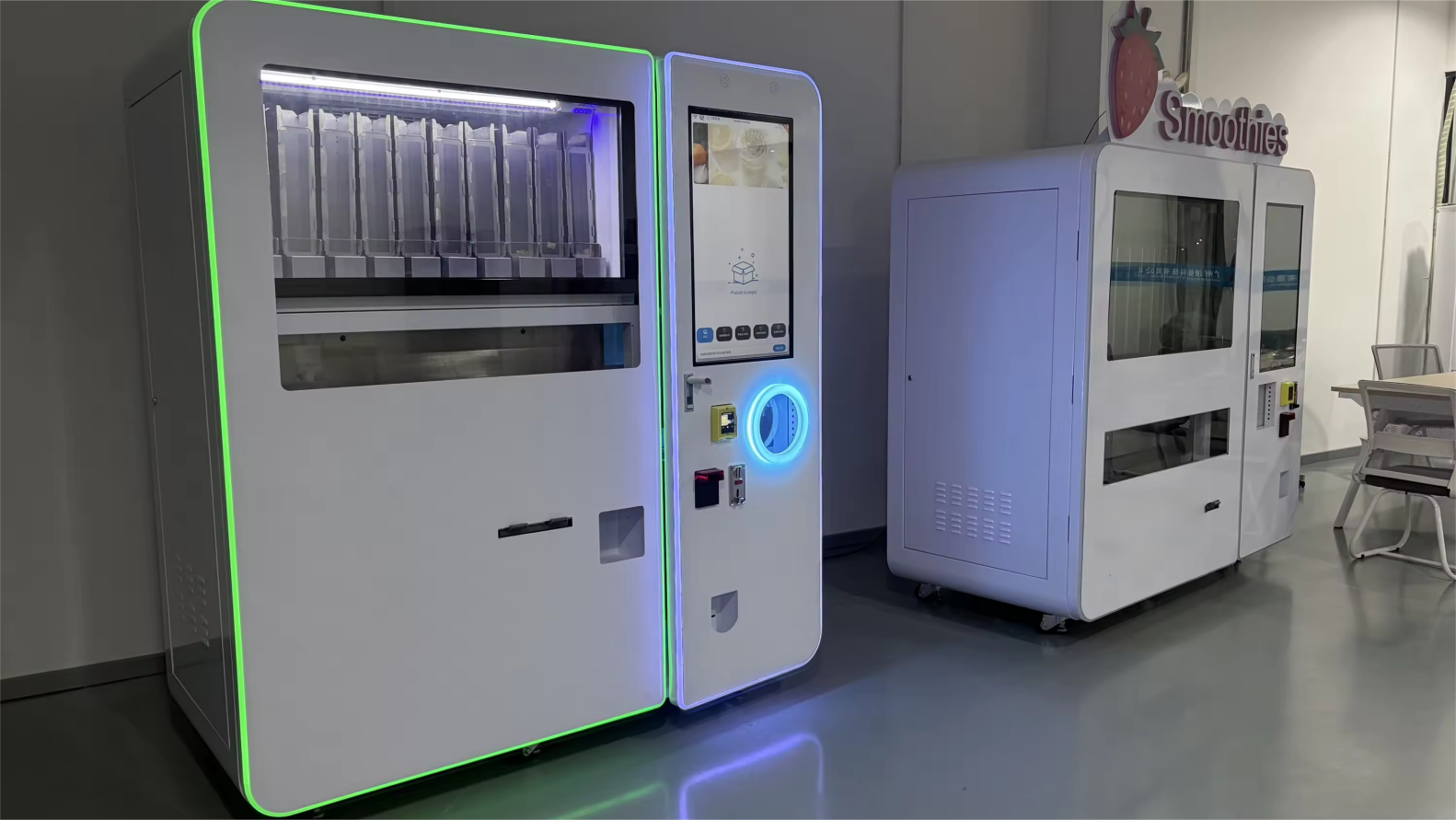
A smoothie vending machine for shopping malls can serve shoppers who want a cold drink without waiting in line at a juice bar or cafe. It can fit mall areas where people pause, walk with family, wait for entertainment, or look for quick refreshment.
However, a mall project should not be planned only around total foot traffic. Buyers should evaluate traffic quality, placement, space, utilities, branding, payment systems, refill access, and the operating model before ordering a machine.
This guide explains what mall owners, vending operators, distributors, and project buyers should confirm before choosing a smoothie vending machine for a shopping mall. If you are still comparing machine configurations, review YumBoxs’ main smoothie vending machine for sale page.
Why Shopping Malls Can Be Suitable Locations
Shopping malls can be suitable because they combine foot traffic, dwell time, impulse purchases, family visitors, and entertainment areas. A smoothie vending machine can offer a quick drink option without needing a full staffed counter.
A mall location may be attractive when it has:
- Steady shopper traffic
- Customers who pause or wait near the placement area
- Visibility from main walkways
- Enough space for ordering and pickup
- Stable power and network access
- Clear approval from mall management
- A practical refill and cleaning route
Still, a busy mall does not automatically mean a strong vending location. The best placement usually combines visibility, customer intent, and operational access. This is why a smoothie vending machine for shopping malls should be planned around shopper behavior, not traffic volume alone.
For a broader site-selection framework, see best locations for smoothie vending machine projects.
Mall Traffic and Impulse Purchases
Mall shoppers often make impulse purchases when a product is visible, easy to understand, and quick to buy. A smoothie vending machine can benefit from this behavior if the machine is placed where people naturally slow down.
Good impulse locations may include:
- Food court edges
- Cinema entrances or waiting areas
- Children’s activity zones
- Fitness or wellness floors
- Entertainment areas
- High-visibility corridors with enough space
Do not choose a location only because many people pass by. If shoppers are rushing through a narrow corridor, they may not stop. A slightly slower area with better visibility may perform better.
Family and Younger Customer Demand
Shopping malls often attract families, younger shoppers, and groups. These visitors may respond well to cold drinks, fruit-based menu options, and a self-service ordering experience.
Buyers should think about the customer group near the planned location:
- Are there family visitors nearby?
- Are there students or younger shoppers?
- Do customers spend enough time in the area to stop and order?
- Is the machine easy to understand at a glance?
- Does the drink menu fit the location’s customer profile?
For example, a machine near a cinema or children’s entertainment zone may need a simple menu and clear visual design. A machine near a gym or wellness floor may need a more health-focused menu.
Do not make unsupported claims about sales or profitability. Instead, use real mall traffic, customer behavior, rent, and service costs to evaluate the project.
Recommended Placement in Shopping Malls
Placement is one of the most important decisions for a mall project. The machine should be visible without blocking movement. It should also be easy for staff or operators to access for refilling and cleaning.
Potential placement areas include:
- Near food courts, but not hidden behind existing counters
- Near cinema or entertainment waiting areas
- Near family activity zones
- Near escalator exits with enough open space
- Near fitness, wellness, or leisure tenants
- Near seating areas where shoppers pause
Before finalizing the site, walk the mall during peak and non-peak hours. Watch where people slow down, where they wait, and where they naturally look.
The article how a smoothie vending machine works can also help mall teams understand the ordering, payment, cup dispensing, blending, rinsing, and backend workflow.
Space and Utility Requirements
A shopping mall project must confirm installation conditions before production. The machine needs enough space for the cabinet, customer ordering, drink pickup, service access, and safe pedestrian movement.
Buyers should confirm:
- Machine dimensions and placement area
- Power supply
- Wi-Fi, Ethernet, or 4G connection
- Access for refilling fruit, liquids, powders, and cups
- Cleaning access
- Fire safety or mall facility requirements
- Whether the placement affects walkways or emergency routes
Current YumBoxs project information recommends indoor or sheltered installation. Outdoor installation requires a suitable canopy and weather protection.
For a mall, indoor placement is usually easier to control. Still, the buyer should confirm temperature, access hours, and facility rules with mall management.
Branding and Advertising Screen Content
Shopping malls are visual environments. Machine appearance, exterior stickers, screen content, and menu design can affect customer attention.
Current YumBoxs project information states that machine branding and interface customization are available depending on configuration. Buyers can use this to match the mall environment, operator brand, or campaign theme.
Before production, confirm:
- Will the exterior use custom stickers?
- Will the machine show a brand logo?
- Which interface language is needed?
- Does the screen need promotional content?
- Who prepares approved artwork?
- Does the mall have rules for machine appearance or advertising?
Branding should support the purchase decision without making unsupported claims. Avoid fake urgency, exaggerated health claims, or unverified customer results.
Payment Systems for Mall Customers
Payment should match how mall customers already pay. In many malls, customers expect fast card, NFC, mobile wallet, or QR-code payment. Some markets may still need cash options.
For YumBoxs smoothie vending machines, Nayax card payment is available. Coin acceptors and bill acceptors are optional depending on configuration. The machine can use Wi-Fi, Ethernet, or 4G depending on setup.
Before ordering, confirm:
- Which payment methods do mall customers prefer?
- Does the selected payment provider support the target country?
- Who manages the merchant account?
- Does the mall provide stable network access?
- Does the mall require receipts, reports, or payment documentation?
For a broader payment checklist, read vending machine payment systems.
Operator-Owned vs. Mall-Owned Models
A mall smoothie vending project can follow different ownership models. The right model depends on who wants to invest, operate, refill, clean, and manage payments.
Common models include:
- Operator-owned machine placed inside the mall
- Mall-owned machine operated by mall staff or a service partner
- Revenue-share agreement between mall and operator
- Distributor-supported project for a chain mall group
- Brand-sponsored machine with custom exterior design
Each model changes responsibilities. An operator-owned model may reduce workload for the mall, but the agreement must define rent, revenue share, service access, and reporting. A mall-owned model gives the mall more control, but the mall must manage operation or assign a service team.
Before ordering, put responsibilities in writing. This includes refilling, cleaning, payment account setup, maintenance, service access, and emergency contact process.
Questions Mall Buyers Should Ask Before Buying
Use this checklist before confirming a smoothie vending machine for shopping malls.
| Planning Area | Questions to Ask |
|---|---|
| Traffic | Does the location have qualified traffic or only high passing volume? |
| Placement | Can shoppers see and access the machine easily? |
| Space | Is there enough room for ordering, pickup, and service access? |
| Utilities | Is power and network access available? |
| Menu | Which recipes match the mall customer profile? |
| Branding | Are exterior stickers, logo, and interface language needed? |
| Payment | Which payment methods are required for the market? |
| Operation | Who refills, cleans, and checks the machine? |
| Ownership | Will the machine be operator-owned, mall-owned, or revenue-share? |
| Approval | Has mall management approved placement and service access? |
Need help matching a smoothie vending machine to your shopping mall location? Contact YumBoxs for mall project configuration guidance before confirming production.
Final Recommendation
A smoothie vending machine for shopping malls can be a practical project when the location has qualified traffic, strong visibility, enough space, stable payment access, and a clear service plan.
Before buying, review the customer profile, placement area, power and network access, branding needs, payment methods, refill plan, cleaning duties, and ownership model. These details matter more than foot traffic alone.
If you are planning a mall smoothie vending project, prepare the mall location type, estimated traffic pattern, available space, preferred payment methods, branding needs, and service plan before requesting a quotation.