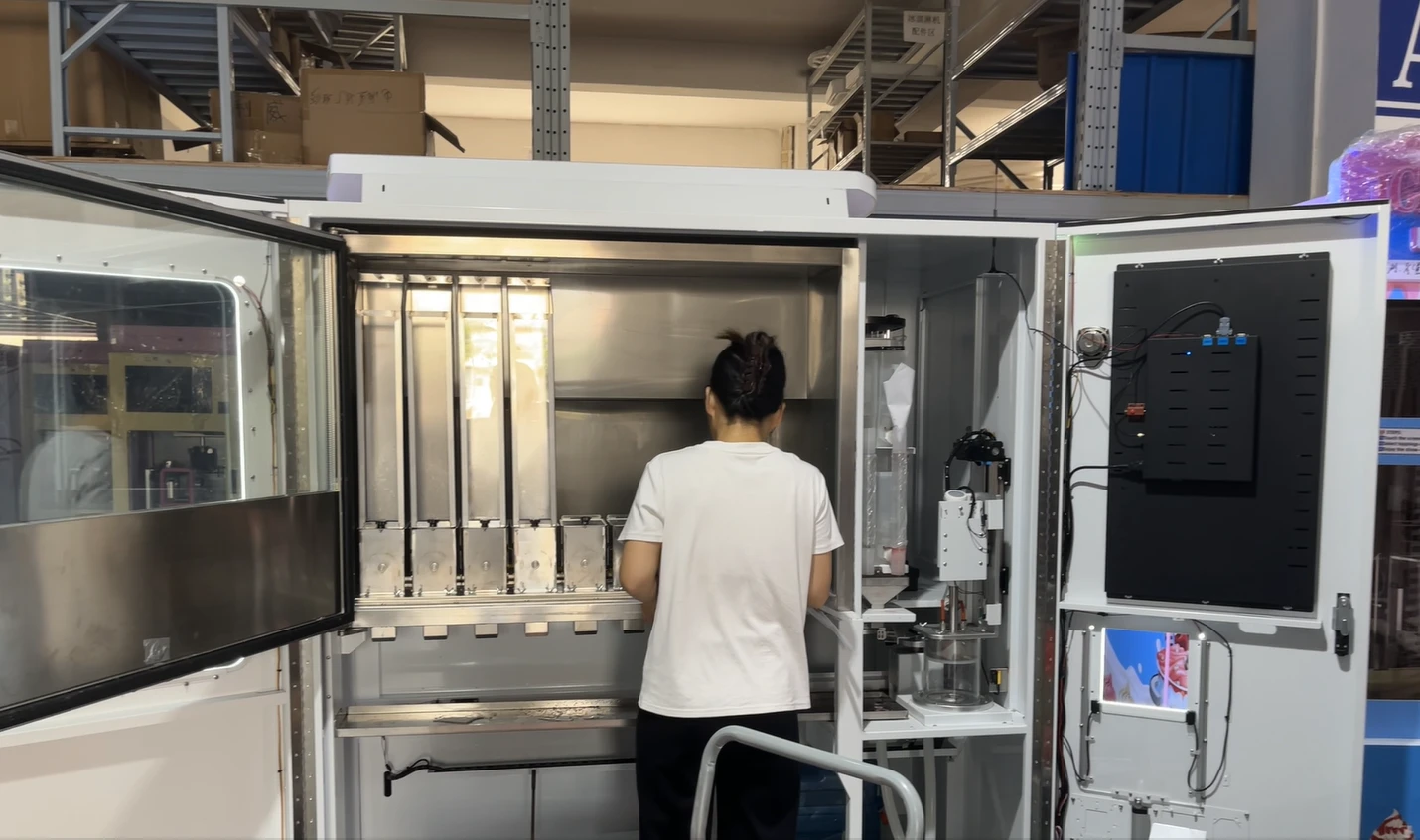
Learning how to clean a smoothie vending machine is essential before buying or operating one. Smoothie machines handle fruit, liquids, powders, cups, and blending parts, so cleaning affects drink quality, machine reliability, and daily operation.
Automatic rinsing can help reduce residue after each drink, but it does not replace all manual cleaning. Operators still need a clear routine for daily cleaning, ingredient containers, the cup area, weekly deep cleaning, and cleaning records.
This guide explains what B2B buyers should confirm before placing a machine in gyms, shopping malls, schools, hotels, hospitals, offices, or other commercial locations. If you are still comparing configurations, review YumBoxs’ main smoothie vending machine for sale page.
Why Cleaning Matters
A smoothie vending machine is different from a standard snack or bottled drink machine. It prepares drinks inside the machine, so ingredient handling and cleaning are part of the operating plan.
Cleaning matters because it affects:
- Drink consistency
- Ingredient residue control
- Customer confidence
- Machine uptime
- Operator workload
- Service and maintenance planning
Buyers should discuss cleaning before production, not after delivery. The machine configuration, ingredient plan, and location type can all affect the cleaning routine. A buyer who understands how to clean a smoothie vending machine can plan staffing, refills, and service access more accurately.
Automatic Rinsing Function
Current YumBoxs project information states that the smoothie vending machine performs automatic rinsing after each cup. This function helps reduce residue after every order and supports a cleaner drink preparation workflow.
However, automatic rinsing is only one part of the cleaning plan. It does not remove the need for manual checks, ingredient container cleaning, cup area cleaning, or scheduled deep cleaning.
Before ordering, ask the manufacturer:
- Which parts rinse automatically after each drink?
- How does the rinsing process work?
- How is rinse water handled?
- Which parts still need manual cleaning?
- How should operators check the rinsing area?
Current YumBoxs project information also states that no direct drainage connection is required in the standard configuration. Buyers should still confirm final rinse water handling for the exact machine setup.
Daily Cleaning Tasks
Daily cleaning should focus on areas that customers see and areas that contact ingredients. The exact routine depends on the final configuration and local operating rules.
A daily checklist may include:
- Checking the dispensing and pickup area
- Wiping visible surfaces
- Checking the cup dispensing area
- Inspecting ingredient areas for residue
- Confirming rinse water handling
- Checking machine alerts or backend status
- Recording completed cleaning tasks
Operators should avoid treating daily cleaning as optional. In busy locations, daily checks can help prevent small issues from becoming service problems.
Ingredient Container Cleaning
Smoothie vending machines may use frozen fruit, liquids, and powders. Ingredient containers need a cleaning routine that matches the ingredient type and refill frequency.
Current YumBoxs smoothie vending machine information includes eight fruit bins, four liquid tanks, and four powder bins. These modules help support recipe flexibility, but they also require a clear refill and cleaning plan.
Before operation, confirm:
- How fruit bins should be cleaned
- How liquid tanks should be cleaned
- How powder bins should be cleaned
- Which parts can be removed for cleaning
- How often each container should be cleaned
- Which cleaning tools or procedures are recommended
Ingredient texture matters. Powders, liquids, and frozen fruit can create different cleaning needs, so buyers should confirm the routine with the manufacturer before finalizing recipes.
Cup and Dispensing Area
The cup and dispensing area is highly visible to customers. It should look clean, organized, and easy to use.
Current YumBoxs project information states that the standard cup size is approximately 12 oz or 350 ml and that approximately 80 cups can be stored depending on cup configuration.
Operators should check:
- Cup storage condition
- Cup dispensing path
- Pickup area cleanliness
- Spills or residue near the outlet
- Customer-facing surfaces
- Whether cup refills are recorded
This area can influence customer trust. Even if the machine works correctly, a messy pickup area can reduce confidence in the drink.
Weekly Deep Cleaning
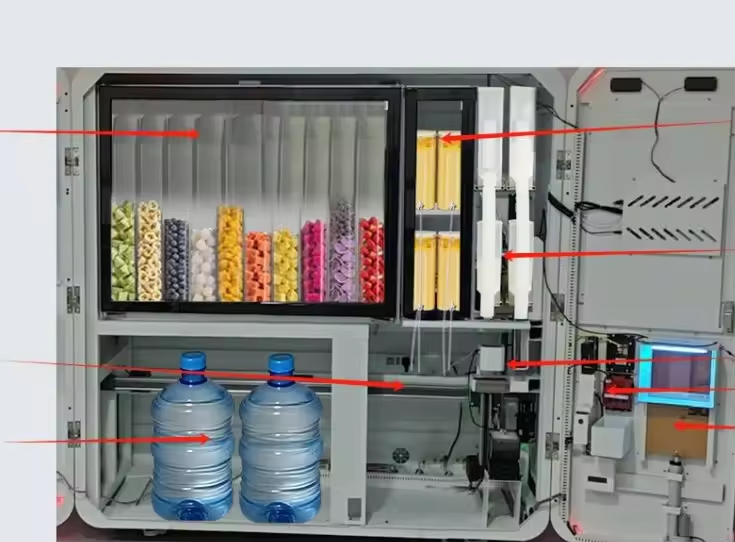
Weekly deep cleaning should go beyond visible surfaces. It should include a more complete check of ingredient modules, dispensing areas, internal surfaces, and parts that require routine inspection.
A weekly cleaning plan may include:
- Deep cleaning removable containers
- Inspecting the blending and dispensing area
- Checking seals, doors, and contact areas
- Reviewing backend alerts or maintenance records
- Checking cup storage and refill supplies
- Confirming that automatic rinsing works as expected
The exact deep cleaning process should follow the manufacturer’s guidance for the final machine configuration.
Cleaning Records
Cleaning records help operators manage multiple machines and keep service routines consistent. They can also help teams identify repeated issues.
A simple cleaning record may include:
- Date and time
- Machine location
- Tasks completed
- Ingredient containers checked
- Refills completed
- Problems found
- Staff member or operator name
For multi-location vending operators, a consistent record format can make training and supervision easier.
What Buyers Should Confirm With the Supplier
Before buying, ask the supplier for clear cleaning and maintenance guidance. Do not rely only on general claims that the machine is easy to clean. The supplier should explain how to clean a smoothie vending machine based on the final ingredient and cup configuration.
| Cleaning Area | Questions to Ask |
|---|---|
| Automatic rinsing | Which parts rinse after each cup, and what still needs manual cleaning? |
| Fruit bins | How should fruit bins be removed, cleaned, and refilled? |
| Liquid tanks | How often should tanks be cleaned, and which liquids are suitable? |
| Powder bins | How should powder residue be handled? |
| Cup area | How should the cup storage and pickup area be checked? |
| Deep cleaning | What weekly or scheduled cleaning tasks are recommended? |
| Records | Does the operator need a cleaning checklist or service log? |
| Support | What remote technical support is available if cleaning-related issues occur? |
For more context on the overall workflow, see how a smoothie vending machine works.
Need help confirming cleaning and maintenance requirements? Contact YumBoxs for machine-specific guidance before production.
Final Recommendation
How to clean a smoothie vending machine depends on the machine configuration, ingredient plan, location, and service schedule. Automatic rinsing helps, but operators still need daily cleaning, container cleaning, cup area checks, weekly deep cleaning, and clear records.
Before buying, confirm the cleaning process with the manufacturer and assign responsibility for each task. This helps the machine operate more consistently after installation.
If you are planning a smoothie vending machine project, prepare your ingredient plan, location type, refill schedule, and service team before requesting a final recommendation.