A smoothie vending machine can be an attractive business opportunity for shopping malls, gyms, universities, hospitals, office buildings, hotels and other high-traffic locations.
However, before purchasing a machine, most buyers want to know:
- How much does a smoothie vending machine cost?
- What is included in the price?
- What additional expenses should be considered?
- How much revenue can the machine generate?
- Is it difficult to operate and maintain?
This guide explains the main costs, features and business considerations involved in starting a smoothie vending machine business.
How Much Does a Smoothie Vending Machine Cost?
The price of a commercial smoothie vending machine depends on its configuration, payment system, ingredient capacity, refrigeration system, customization and shipping destination.
A standard commercial smoothie vending machine usually costs several thousand US dollars. The final price may vary depending on the options selected.
The main factors affecting the price include:
- Machine structure and ingredient capacity
- Refrigeration and temperature-control system
- Automatic cup dispensing
- Automatic fruit, liquid and powder dispensing
- Touchscreen size
- Card, cash or coin payment system
- Remote management software
- Language customization
- Exterior branding and logo design
- Shipping destination and import requirements
For an accurate quotation, the supplier normally needs to know the buyer’s country, delivery city, required payment methods and expected order quantity.
What Is Included in a Smoothie Vending Machine?
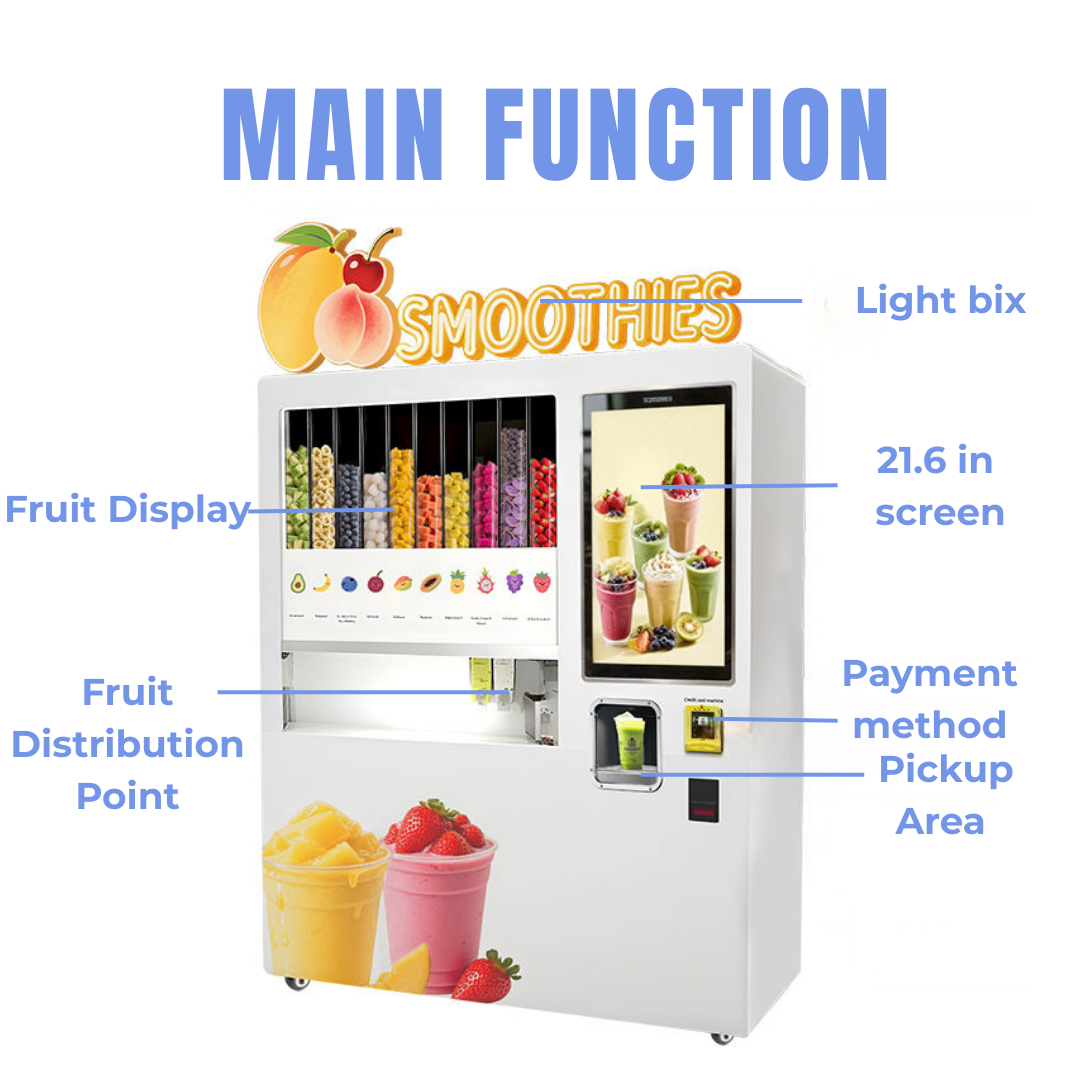
A complete smoothie vending machine should provide the main functions needed to prepare and sell drinks automatically.
A typical configuration may include:
- Refrigerated frozen-fruit storage
- Multiple fruit containers
- Liquid tanks
- Powder containers
- Automatic cup dispenser
- Automatic ingredient dispensing
- Automatic blending system
- Touchscreen ordering interface
- Payment system
- Cup pickup area
- Automatic rinsing function
- Cloud-based management system
- Sales and inventory monitoring
- Fault and shortage notifications
The operator can normally adjust recipes, prices, product images and promotional content through the machine’s management system.
What Additional Costs Should Buyers Consider?
The machine price is only one part of the total investment.
Buyers should also consider the following expenses.
1. Payment System
Card readers, bill acceptors and coin acceptors are often optional.
For markets such as the United States, Mexico, Europe and the Middle East, many operators choose a cashless payment terminal that supports:
- Credit cards
- Debit cards
- NFC payments
- Apple Pay
- Google Pay
The exact payment configuration should be confirmed according to the local market.
2. Shipping and Import Costs
Shipping costs depend on:
- Destination country
- Delivery city or ZIP code
- Machine size and weight
- Sea freight rates
- Import duties and taxes
- Customs-clearance requirements
- Door-to-door or port delivery
Some suppliers can provide DDP delivery, which may include sea freight, customs clearance, import taxes and delivery to the buyer’s address.
3. Branding and Exterior Design
The machine can usually be customized with:
- Company logo
- Brand colors
- Product images
- Advertising stickers
- Multilingual interface
Basic logo customization may be included, while a full exterior design may involve an additional cost.
4. Ingredients and Consumables
Daily operating expenses include:
- Frozen fruit
- Milk, juice or yogurt
- Protein powder or collagen powder
- Cups
- Lids
- Straws
- Cleaning materials
- Water
- Electricity
These costs vary according to the recipe, serving size and local ingredient prices.
5. Location Rent
Location quality is one of the most important factors affecting sales.
A high-traffic location may charge:
- Fixed monthly rent
- Revenue-sharing commission
- A combination of rent and commission
Before purchasing a machine, buyers should estimate the expected foot traffic and target customer profile at the planned location.
How Does a Smoothie Vending Machine Work?
The purchasing process is simple.
- The customer selects a smoothie on the touchscreen.
- The customer completes payment.
- The machine automatically dispenses a cup.
- Frozen fruit, liquid and powder are added according to the selected recipe.
- The ingredients are blended automatically.
- The finished smoothie is delivered to the pickup area.
- The machine performs an automatic rinsing cycle.
The entire process is completed without an employee preparing the drink manually.
Does the Machine Use Real Fruit?
Yes. A commercial smoothie vending machine can use real frozen fruit, including:
- Strawberry
- Mango
- Banana
- Pineapple
- Blueberry
- Peach
- Dragon fruit
- Mixed berries
Frozen fruit is generally recommended because it provides consistent temperature, texture and storage stability.
Depending on the recipe, the machine can also add:
- Milk
- Juice
- Yogurt
- Protein powder
- Collagen powder
- Syrup
- Fruit puree
Operators can create different recipes based on local customer preferences.
How Much Can a Smoothie Vending Machine Earn?
Revenue depends heavily on the location, selling price, foot traffic, product quality and marketing strategy.
Here is a simple example:
- Average selling price: USD 6 per cup
- Average sales: 30 cups per day
- Daily revenue: USD 180
- Monthly revenue: USD 5,400
If the machine sells 40 cups per day:
- 40 cups × USD 6 = USD 240 per day
- USD 240 × 30 days = USD 7,200 per month
These figures represent gross revenue, not net profit.
The operator still needs to deduct:
- Ingredient costs
- Cup and packaging costs
- Location rent
- Electricity
- Payment-processing fees
- Maintenance expenses
- Local taxes
Actual results may be higher or lower depending on the location and operation strategy. Buyers should avoid relying on guaranteed-income claims and should evaluate the local market carefully.
Best Locations for a Smoothie Vending Machine
Smoothie vending machines are most suitable for locations with strong foot traffic and demand for convenient, healthy drinks.
Recommended locations include:
Gyms and Fitness Centers
Gym customers are interested in protein, fruit and low-sugar drink options. Operators can add protein powder, collagen or other dry ingredients to selected recipes.
Shopping Malls
Shopping malls provide consistent traffic from families, young consumers and office workers.
Universities and Schools
Students often look for affordable and convenient drinks between classes.
Office Buildings
A smoothie vending machine can provide employees with a quick breakfast, snack or afternoon drink.
Hospitals and Medical Centers
Healthy beverage options may be attractive to staff, visitors and patients’ families.
Hotels and Tourist Locations
Hotels, resorts, beaches and tourist areas can generate strong demand, especially in warm climates.
The best location is not always the place with the highest traffic. The target customers, rental cost, visibility and nearby competition should also be considered.
How Often Does the Machine Need to Be Refilled?
Refill frequency depends on daily sales.
The machine should monitor the remaining quantities of:
- Fruit
- Liquid
- Powder
- Cups
- Water
Operators can receive low-stock or fault notifications through the management system.
In a busy location, ingredients may need to be checked every one to three days. Cleaning and ingredient management should be included in the operator’s daily routine.
Is the Machine Easy to Clean?
A suitable commercial machine should include an automatic rinsing function after each order.
However, automatic rinsing does not completely replace manual cleaning.
Recommended maintenance includes:
- Daily cleaning of visible food-contact areas
- Daily inspection of the cup and pickup area
- Regular cleaning of liquid tanks and pipes
- Weekly deep cleaning
- Regular inspection of the blender and dispensing system
Following a clear cleaning schedule helps maintain drink quality and machine reliability.
Can the Machine Be Managed Remotely?
A cloud-based management system allows the operator to monitor the machine from a mobile phone or computer.
Depending on the software, the operator may be able to view:
- Daily and monthly sales
- Current inventory
- Machine status
- Fault notifications
- Cup shortages
- Ingredient shortages
- Product prices
- Recipes
- Advertising content
Remote monitoring is especially useful for operators managing several machines in different locations.
Can the Screen Support Different Languages?
Yes. The touchscreen interface can usually be customized for different markets.
Common language options include:
- English
- Spanish
- Arabic
- Turkish
- Portuguese
A bilingual interface can also be provided when required.
What Payment Methods Are Available?
Payment options may include:
- Credit card
- Debit card
- Apple Pay
- Google Pay
- NFC payment
- Banknotes
- Coins
- Local QR-code payment
Payment compatibility varies by country. Buyers should confirm the payment provider, transaction fees and account-opening requirements before shipment.
What Warranty and Technical Support Should Be Provided?
A reliable supplier should provide clear after-sales support.
This may include, depending on the agreed order terms:
- Warranty terms confirmed before order
- Remote installation guidance
- English or Spanish instruction manuals
- Video training
- Online technical support
- Spare-parts supply
- Software guidance
- Operation and recipe support
Before purchasing, buyers should confirm which components are covered by the warranty and who is responsible for spare-parts shipping costs.
Questions to Ask Before Buying
Before selecting a supplier, ask the following questions:
- Does the machine use real frozen fruit?
- How many fruit, liquid and powder containers are included?
- What is the refrigeration temperature?
- What payment systems are supported in my country?
- Can I manage recipes and prices remotely?
- Does the machine support my local language?
- What cleaning is required?
- What is included in the warranty?
- Are replacement parts available?
- What is the total shipping cost to my city?
- Is installation training included?
- Can the machine be customized with my brand?
Clear answers to these questions can help prevent unexpected costs after purchase.
Is a Smoothie Vending Machine a Good Investment?
A smoothie vending machine may be suitable for entrepreneurs, vending operators, gym owners, hotel operators and investors looking for an automated beverage business.
Its main advantages include:
- No full-time employee required
- 24-hour selling potential
- Consistent recipes
- Remote management
- Flexible pricing
- Multiple location opportunities
- Custom branding
- Healthy product positioning
However, success depends on selecting the right location, setting a suitable selling price, controlling ingredient costs and maintaining the machine properly.
The machine is an operational tool. The location and business strategy determine the final result.
Get a Smoothie Vending Machine Quotation
Yumboxs manufactures commercial smoothie vending machines for international markets.
We provide:
- Machine production and testing
- Payment-system configuration
- Customized branding
- Multilingual touchscreen interface
- Shipping support
- Installation guidance
- Remote technical support
- Operation and recipe guidance
To receive an accurate price and shipping estimate, please provide:
- Your country
- Delivery city or ZIP code
- Required quantity
- Preferred payment methods
- Planned installation location
Contact Yumboxs to receive the machine price, available configuration and shipping cost for your market.
Ready to compare configurations? Request a smoothie vending machine quotation.