If you are researching how to start a vending machine business in 2026, begin with the customer and location—not the machine. Choose a product that fits a specific venue, confirm that the site has qualified demand, build a complete investment budget, and only then compare machines and suppliers. Your result will depend on location quality, operating discipline, product margins, payment compatibility, and service support. A vending machine is an automated sales channel, but it is not a passive-income guarantee.
Quick Answer: How Do You Start a Vending Machine Business?
A first-time investor can use this seven-step process:
- Choose an operating model and define who will buy.
- Shortlist locations before selecting a machine.
- Estimate total startup and monthly operating costs.
- Match the machine and product to the location.
- Confirm payment, power, network, certification, and service requirements.
- Compare suppliers using written specifications—not price alone.
- Launch one test location, measure results, and improve before expanding.
The order matters. Buying a machine first can leave you trying to force the wrong product into an unsuitable location.
1. Choose the Right Vending Business Model
Your business model determines who pays for the machine, who controls the location, and who handles daily operations. For a first project, choose one model deliberately rather than combining several unclear arrangements.
| Business model | How it works | Main advantage | Main responsibility |
|---|---|---|---|
| Owner-operator | You buy the machine, secure the location, stock or service it, and keep the sales revenue. | More control over pricing, products, and operations. | You carry the investment and operating risk. |
| Revenue share | You place the machine at another business and share revenue or profit under a written agreement. | May reduce fixed rent at the beginning. | The revenue definition, payment schedule, utilities, and responsibilities must be clear. |
| Fixed location rent | You pay a fixed amount for the right to operate at the venue. | Simple commercial arrangement when sales are strong. | Rent continues even when sales are below plan. |
| Venue-owned machine | A gym, hotel, university, mall, or other venue buys the machine and operates it internally. | The venue already understands its customers and controls the site. | The venue needs staff, maintenance ownership, and a product plan. |
Before moving forward, write one sentence that defines the concept: “We will sell to [customer] at [type of location] using [operating model].” If that sentence is vague, the project is not ready for a machine quotation.
2. Validate the Location Before Buying a Machine
A high-traffic location is not automatically a good vending location. What matters is qualified traffic: people who can see the machine, want the product, can pay easily, and have a reason to buy at that moment.
Check customer fit
- Who passes the proposed machine area?
- What problem does the product solve at this location?
- When are the strongest purchase periods?
- What alternatives are already available nearby?
- Does the expected selling price fit the customer?
Check the physical site
- Measure the entrance, elevator, corridor, and final placement area—not only the floor space.
- Confirm voltage, frequency, socket type, circuit capacity, and grounding.
- Check mobile signal, Wi-Fi, or wired network needs for payment and remote management.
- Confirm indoor, sheltered, temperature, ventilation, drainage, and food-safety requirements where applicable.
- Plan safe access for refilling, cleaning, maintenance, and cash collection.
- Obtain written placement approval and clarify rent, revenue share, utilities, insurance, damage, and termination terms.
Count traffic during relevant time periods and observe customer behavior before signing a long location agreement. The quality of the estimate depends on the quality of your local data. You can test cautious, expected, and stronger scenarios with the vending machine profit calculator and ROI tool, but the result is still an estimate rather than a sales promise.
3. Select a Machine That Fits the Business
Machine selection should follow the product, customer, site, and operating plan. A visually impressive machine can still be a poor investment if it requires more cleaning, refilling, technical support, or ingredient control than the operator can provide.
| Machine category | Potential venue fit | Important operating questions |
|---|---|---|
| Packaged snack or drink | Offices, campuses, transport sites, mixed-use venues | Product capacity, shelf life, planogram, refrigeration, and refill frequency |
| Coffee or prepared beverage | Offices, hotels, waiting areas, campuses | Water, ingredients, cup supply, cleaning, taste consistency, and waste handling |
| Smoothie or protein drink | Gyms, malls, universities, wellness-focused venues | Cold chain, recipes, allergens, ingredient storage, cleaning, and daily service workload |
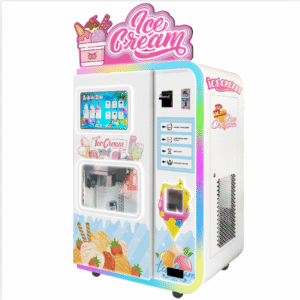
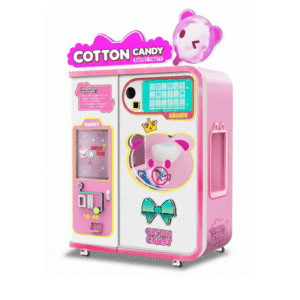
| Ice cream, cotton candy, or entertainment vending | Malls, attractions, family venues, leisure sites | Audience fit, visual appeal, consumables, cleaning, and peak-period throughput |
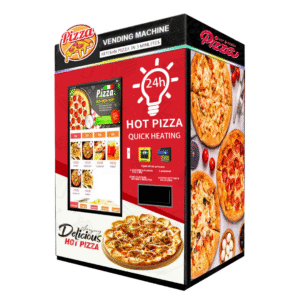
| Pizza or hot food | 24-hour sites, campuses, hotels, transport or late-night locations | Food regulations, heating process, storage, temperature control, ventilation, and cleaning |
| Custom retail or service machine | Product-specific commercial projects | Dispensing mechanism, software, product dimensions, testing, and spare parts |
Compare available categories on the Yumboxs vending machine products page, but do not select from product photos alone. Request dimensions, weight, power requirements, capacity, payment interfaces, network functions, daily maintenance tasks, warranty terms, and spare-parts information for the exact model and configuration.
4. Calculate the Full Vending Machine Investment Cost
The machine price is only one part of the investment. The total varies by machine type, configuration, destination, location conditions, payment hardware, and local compliance requirements. Build the budget in four groups.
Machine and configuration
- Base machine
- Payment terminal, coin or bill equipment
- Branding, language, menu, software, or hardware customization
- Optional refrigeration, heating, telemetry, or dispensing features
- Initial spare-parts package
Delivery and site setup
- Export packing and international freight
- Insurance, customs clearance, duties, taxes, and local handling
- Delivery from the port or warehouse to the final site
- Forklift, tail-lift truck, crane, elevator protection, or specialist movers if required
- Electrical, water, drainage, ventilation, or network preparation
- Installation, commissioning, and operator training
Opening inventory and launch
- Products, ingredients, cups, packaging, or consumables
- Licenses, permits, insurance, and inspections where required
- Location deposit or first rent payment
- Launch signage and local promotion
- Working capital for refunds, replacements, and early operating costs
Monthly operating costs
- Product or ingredient cost
- Rent or revenue share
- Payment processing and connectivity fees
- Electricity, water, cleaning materials, and waste disposal
- Refilling, cleaning, travel, and labor
- Maintenance, replacement parts, losses, refunds, and insurance
Calculate at least three scenarios. A cautious case helps you see whether the business can survive weaker sales or higher costs. An expected case supports routine planning. A stronger case shows upside, but should not be used as the only basis for an investment decision.
5. Confirm Payment, Compliance, and Daily Operations
Do not assume that a payment device used in one country will work in another. Compatibility may depend on the local provider, merchant account, currency, network, machine interface, and certification. Review the detailed vending machine payment systems buyer guide, then obtain written confirmation from both the machine supplier and payment provider before production.
Also check local business registration, tax, food handling, labeling, accessibility, electrical safety, fire, building, insurance, and venue rules. Requirements vary by country, city, product, and location. Confirmation may be required from local authorities or qualified advisers; a machine supplier cannot approve your local business compliance.
Write a weekly operating schedule before launch. Assign responsibility for refilling, stock rotation, cleaning, transaction checks, refunds, customer support, fault reporting, preventive maintenance, and sales review. If no one owns these tasks, the machine is likely to be neglected.
6. How to Select a Vending Machine Supplier
A useful supplier comparison makes every company quote the same project. Send each supplier a written requirement sheet covering the product, destination country, venue, machine quantity, payment method, voltage, language, branding, connectivity, required documents, delivery city, and target launch date.
Ask for evidence and written answers
- Exact model, specification, dimensions, weight, and capacity
- Photos or video of the real machine performing its core process
- Payment hardware model and compatibility responsibilities
- Voltage, frequency, plug, and electrical configuration
- Software, language, telemetry, SIM, server, and recurring-fee details
- Cleaning, maintenance, and operator instructions
- Testing scope and pre-shipment inspection options
- Warranty scope, exclusions, response process, and time zone
- Recommended spare parts, prices, and shipping method
- Production lead time, Incoterm, packing, freight scope, and documents
- Certification or test documents for the exact model—not only a general company certificate
If you are purchasing internationally, read how to import a vending machine from China before paying a deposit. Import cost and responsibility depend on the agreed shipping term, destination rules, machine classification, and local delivery conditions.
Price matters, but an incomplete quotation can look cheaper by excluding payment equipment, customization, packing, freight, import costs, installation, training, or spare parts. Compare total project scope and risk, not only the number at the bottom of the first quote.
7. Launch One Location and Measure the Right Numbers
For a first investment, a controlled test can reveal more than a large initial order. Whether a one-machine order is available depends on the model and production schedule, so confirm it with the supplier.
During the test, track:
- Sales by day and time
- Transactions relative to qualified traffic
- Average selling price and gross profit per sale
- Product waste, stockouts, and refunds
- Payment failures
- Refill, cleaning, and travel time
- Machine alerts, downtime, and service response
- Rent, utilities, payment fees, and other operating costs
- Customer questions and product requests
Set a review date before launch. If the results are weak, diagnose the product, price, visibility, traffic quality, payment experience, and operating execution before assuming that another machine will solve the problem.
Practical Buying Tips for First-Time Investors
- Secure a conditional location agreement. Where possible, make the final commitment subject to site approval, machine fit, utilities, and delivery access.
- Measure the full delivery route. Confirm doors, elevators, turning space, loading restrictions, floor capacity, and uncrating space.
- Test the exact payment flow. Ask for a video or live test using the proposed hardware and clarify who activates the merchant account.
- Request operating documents early. Review cleaning, refilling, troubleshooting, and maintenance tasks before ordering.
- Budget for downtime. Ask which parts commonly need replacement, what can be diagnosed remotely, and how parts will reach your country.
- Keep approval records. Put the configuration, artwork, software, payment, accessories, documents, and shipping scope in writing.
- Do not rely on supplier ROI claims. Use local traffic, price, cost, rent, labor, and payment data to build your own model.
Common Mistakes to Avoid
Buying before confirming the location
This reverses the decision process. The machine may be too large, unsuitable for the customer, incompatible with the site, or expensive to operate.
Treating foot traffic as guaranteed demand
People may pass without seeing the machine, wanting the product, accepting the price, or having time to stop. Observe qualified traffic near the exact placement area.
Budgeting only for the machine
Freight, customs, site work, payment hardware, stock, rent, labor, maintenance, and working capital can materially change the required investment.
Choosing the cheapest quotation
A low quote may exclude important configuration or support. Compare the same specification, commercial term, warranty, and delivery scope across suppliers.
Assuming “cashless” means locally compatible
The terminal may still require a supported provider, merchant approval, local network, currency setup, and compatible machine interface.
Calling the business passive
Automated selling reduces the need for a staffed counter, but the business still requires stock, cleaning, service, refunds, bookkeeping, location management, and performance review.
Yumboxs Experience: Confirm the Project Before Production
From our experience working with overseas buyers, many avoidable problems begin when the machine is ordered before the project requirements are fully confirmed. Payment method, language, voltage, branding, software, destination documents, packing, and shipping responsibilities can affect the final configuration.
Yumboxs has worked on commercial smart vending equipment and overseas project preparation since 2017. Our published manufacturing process includes engineering review, machine configuration, functional testing, export preparation, and remote after-sales coordination. Buyers can also request a factory visit, remote video inspection, or pre-shipment records, subject to the project arrangement. You can review the Yumboxs factory and project workflow for more detail.
The practical lesson is simple: do not accept “supported” as a complete answer. Ask what is supported for the exact model, country, payment provider, power standard, product, and operating environment—and record the answer in the order specification.
Frequently Asked Questions
How much money do I need to start a vending machine business?
The required amount depends on the machine, payment system, customization, shipping, import costs, site preparation, opening inventory, location agreement, licensing, and working capital. Ask for a complete landed-and-installed budget rather than using the machine price alone.
Should I find a location or buy a vending machine first?
Validate and shortlist the location first. The customer, product demand, available space, power, network, access, and venue terms should guide machine selection. Finalize the machine only after both the site and supplier confirm compatibility.
What type of vending machine is best for a beginner?
There is no universal best type. A suitable first machine matches a clearly defined customer need and can be refilled, cleaned, maintained, and supported within your budget and available time. Operational simplicity should be considered alongside sales potential.
Is a vending machine business passive income?
Not completely. The machine automates transactions, but the operator still manages products, refilling, cleaning, payment issues, customer service, maintenance, location relationships, accounting, and performance analysis.
How do I know whether a vending machine supplier is reliable?
Ask for evidence of the real machine, a written specification, payment and power details, testing procedures, warranty terms, support process, spare-parts plan, packing information, and pre-shipment inspection options. Confirm certification and documentation for the exact model and destination rather than relying on general claims.
Plan Your First Vending Machine Project
Before requesting a quotation, prepare your country and city, target venue, product idea, estimated customer demand, budget, preferred payment methods, power standard, available space, delivery access, and launch timeline. This information helps any supplier recommend a more relevant configuration and exposes unanswered questions early.
If you want Yumboxs to review a possible machine configuration, use the vending machine project inquiry form. A recommendation and quotation remain subject to the final model, location, destination, payment, customization, certification, and shipping requirements.